
I was honored to receive a heroes of conservation recognition From, the Friends of Geauga Park District. It was a real special experience to serve as the executive director of this park District. This was the job I took, resulting in the relocation of my family from Greene County to Northeastern Ohio.
Heroes of Conservation
11/02/25
You can never under estimate the influence your actions may have.
Although my father was an avid outdoors person, it never occurred to me to pursue a career in the conservation field until I took a summer job in 1976 at Bruckner Nature Center. This was between my 2nd and 3rd year of college.
I was literally hired to entertain migrant workers’ children. I made up my own nature programs and completely enjoyed the experience. When I went back to Miami, I changed my major to environmental studies.
My junior year I was doing an undergraduate research project on the Little Miami River and I made several contacts at the Green County Park system. This ultimately led to a full-time position in 1980.
Greene County is just east of Dayton, famous for the Xenia tornado and claiming to be the Birthplace of Tecumseh. Ed Dressler was the director and was known for his grant-writing abilities. The agency ran on grants.
When Reagan took office in ‘81, he refused to release the grant funds approved by Congress. We had a 70% cut in our operating budget and I later swore I’d never work for an agency that did not have stable and adequate funding.
I did learn a great deal while working there and I was constantly acquiring additional responsibilities and being reclassified. By the time I left, I was writing two or three land and water conservation fund grants a year, and soliciting contributions from philanthropic organizations as well as individuals. I was supervising all the natural area management, environmental education and interpretation, and park law enforcement.
However, we were still living grant to grant, and I was looking for another job.
Ed believed in me, and early on in my tenure, he started taking me to the park district directors’ meetings in Columbus. This experience was invaluable as I had the opportunity to meet all of the park district directors and learn about their philosophies and management styles. That’s where I met Don Meyer.
Don was an observant man of few words, but we had spoken on a couple of occasions.. Geauga Park District had a reputation as a conservation-first park district, with very few programs. They passed a new levy in 1986 and posted an opening for a deputy director in the winter of 1987. I applied and was interviewed by Don and the park board mid-April and subsequently offered the job.
I arranged to drive up and spend the day with Don after I accepted the position. We toured the parks in his personal S-10 pickup truck. He had a park radio mounted in it, which was very unusual.
He told me there was a problem with the Kelso Lake acquisition and subsequent LWCF reimbursement, and was hopeful that with my past experience and knowledge I could resolve the issue.
The Nature Conservancy had bought properties from three different landowners, and the park board bought them from TNC. After purchasing the properties, the park was planning on getting reimbursed from the grant. Unfortunately, TNC had negotiated a life estate on one of those properties, and this prevented the release of federal funds.
Don explained the situation to me, and I felt that I could resolve a portion of the problem very quickly. The remainder would involve a re negotiation with the landowner, Eric Wesgrin.
I didn’t know about the grant problem, but I had heard from a number of sources that the Museum of Natural History and TNC had very different opinions on the management of the lake’s water level and the subsequent effect on associated critical habitat.
Any successful management would involve the surrounding property owners, CMNH, the Horner family, represented by Fritz Neubauer, and the Akron watershed.
Don seemed very surprised to hear this, and he was focused on getting reimbursed. I told him I could resolve that, but I didn’t want to get caught in a dispute between TNC and the museum.
Don said I would need to work this out with the museum and TNC, and he also said I needed to develop my own relationship with Fritz Neubauer. He said that Fritz was a war hero, and in the minds of many people, a living legend. People either hated or loved him, and I would have to establish my own opinion.
We talked at length about park programming. He saw the potential for parks to be overused, destroying the very essence of why they were preserved. He clearly had mixed emotions about publicity and park visitation. He said it would be my challenge to deal with this and went on to drop a real bomb. He told me that he had terminal cancer and had a short time to live. I realized that Don had hired me to be his replacement.
It is about a 3 1/2-hour drive from Chardon to Beavercreek, and my head was spinning the entire way home.
I intend to start on July 1st, but Don died a few weeks after we toured the parks. I started as the acting director mid-June.
The only other staff person I had met besides Don was Nate Fink. He was a part-time naturalist who was incredibly eccentric and currently on leave.
Don told me Nate agonized over having too many people show up for nature walks.
Don had hired Heidi Curtin as a naturalist. Her vivacious personality and approach to programming were a sharp contrast to Nate. As Nate was transitioning out, Dan Best was hired.
On my first day, I found out there was a bid opening for the Walter C. Best Wildlife Preserve at 2:00. I called a meeting with the department managers, Heidi, Tom Duval, and Nick Fischbach.
The park headquarters at that time was in a small house trailer on Robinson, which was a gravel road. My office was tiny, with barely room for a desk, chair, filing cabinets, and two folding chairs. We all crammed into this space, and when I rolled out the project maps, I realized Tom and Nick had never seen them. Heidi said she had not seen the finished detailed drawings.
The Best project had a few glitches, including hitting a pocket of quicksand. A large bulldozer was nearly buried.
During the construction project, I got a significant donation from Jerry Peterson. This consisted of a number of large pine trees, a planting crew, and the use of a giant tree spade.
Subsequently, Jerry and I established a good relationship. This paid off years later when I asked him to postpone his residential development around Spring Brook while I lined up the initial funds to purchase the stream-side property. He pulled his subdivision zoning request, and this gave the park district time to secure the funds to buy all of Bass Lake.
It was clear that Don held his cards close to his chest, and as I went through his files, I found detailed spreadsheets that had extensive records down to the amount of nails used to build the park outhouses.
He was also very frugal. Our maintenance folks did not have uniforms, and they split 14 cords of sugar house firewood by hand. When I found this out, I asked Tom if the crews used rocks to drive nails?
Don kept all his notes and records with a pencil on graph paper. Official minutes and correspondence were typed. The park system did not own a computer or printer.
It was really remarkable, and I addressed what I saw as a shortcomings.
It was clear to everyone that we had outgrown the house trailer. If Don hadn’t passed away, I don’t know where my office would have been.
There was, however, a concept plan for a new park headquarters, located off Ravenna Road near Tupelo Pond. The sketch drawings looked somewhat like a post office or an elementary school. I was appalled.
I expressed my opinion to the president of the board, Bob McCullough. I told him that we’re one of the largest park districts in the state, located in one of the wealthiest counties in Ohio, and we can’t build a park headquarters and visitor center that looks like a bunker.
I shared this sentiment with the other board members, Al Lang, who was a WWI vet and 90 years old, and Mark Sperry, who was in his 80s. I had to develop a slow, methodical approach to communicate with them.
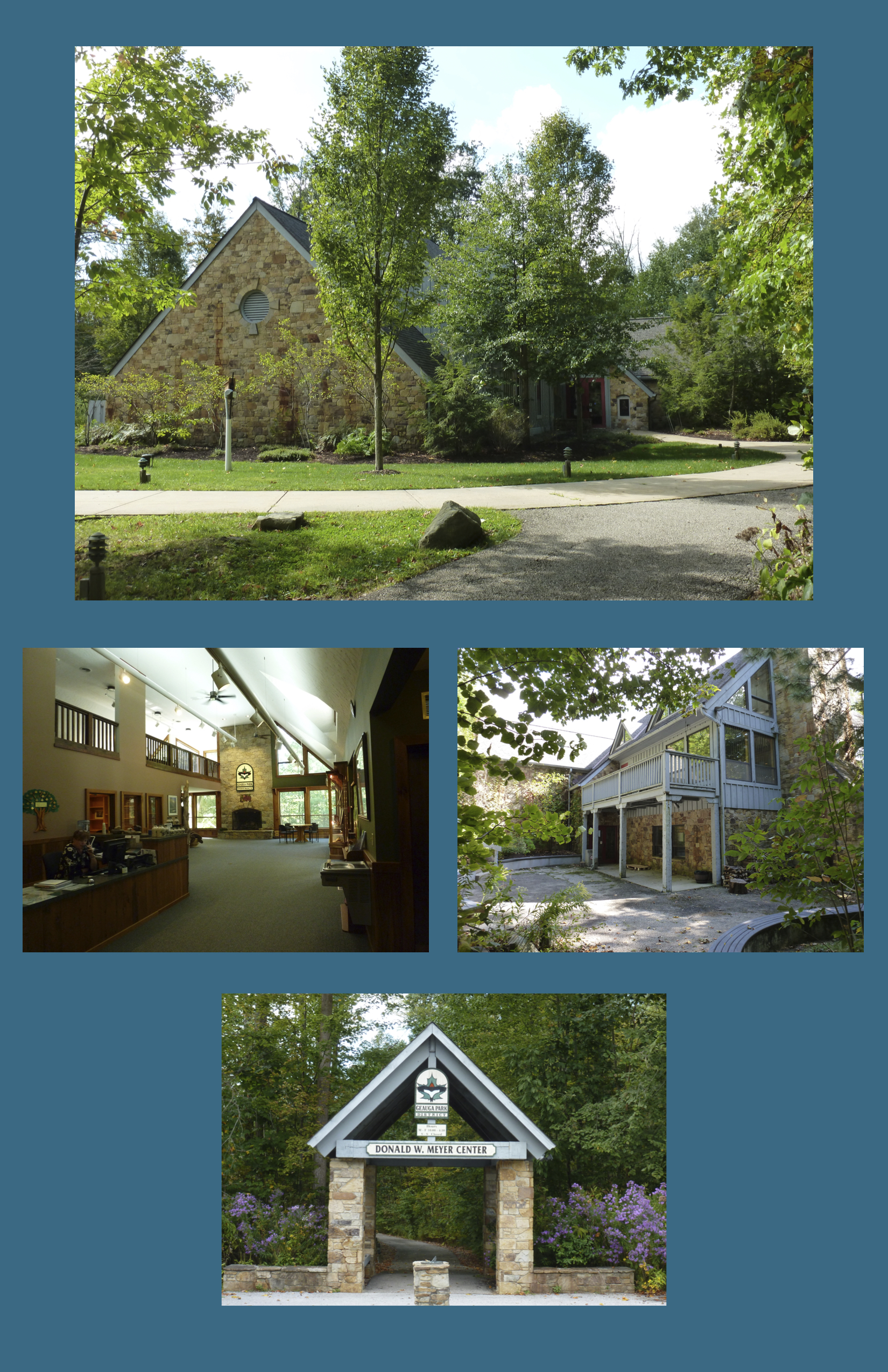
One of my mentors, Joe Pavolonis, was the chief of engineering and design at Cleveland Metro Parks. Joe introduced me to Tony Paskevich, who had designed the Sanctuary Marsh visitor center at North Chagrin. Ultimately, the park board retained Tony to design the Donald W. Meyer Center. This was the first of many projects Tony and I worked on.
Going back to Kelso Lake, it was easy to modify the grant to get a partial reimbursement, which I did before the end of my first month. I started to renegotiate Eric Wesgrins’ life estate. This involved changing it from exclusive use of the lake and surrounding property to just two acres. In doing so, we were able to get the remaining grant money.
As this negotiation was underway, I began meeting with all the stakeholders to establish common ground for a management plan. I also invited representatives from ODNR Division of Natural Areas and Preserves. I felt that Kelso should be a dedicated state nature preserve, and ultimately, that dedication came to pass.
Holding individual stakeholder meetings, I took everyone out in a canoe to talk about managing the water level: Al Krieger represented Akron, Jim Bissell, the museum, and Jeff Knoop, TNC. Akron was ambivalent, but it was clear TNC and the Museum had differing opinions.
Fritz was the last stakeholder I met with. I wanted to have everyone on the same page if possible before meeting with Fritz. Bissell suggested that I bring a six-pack of beer when I met with Fritz, which was good advice.
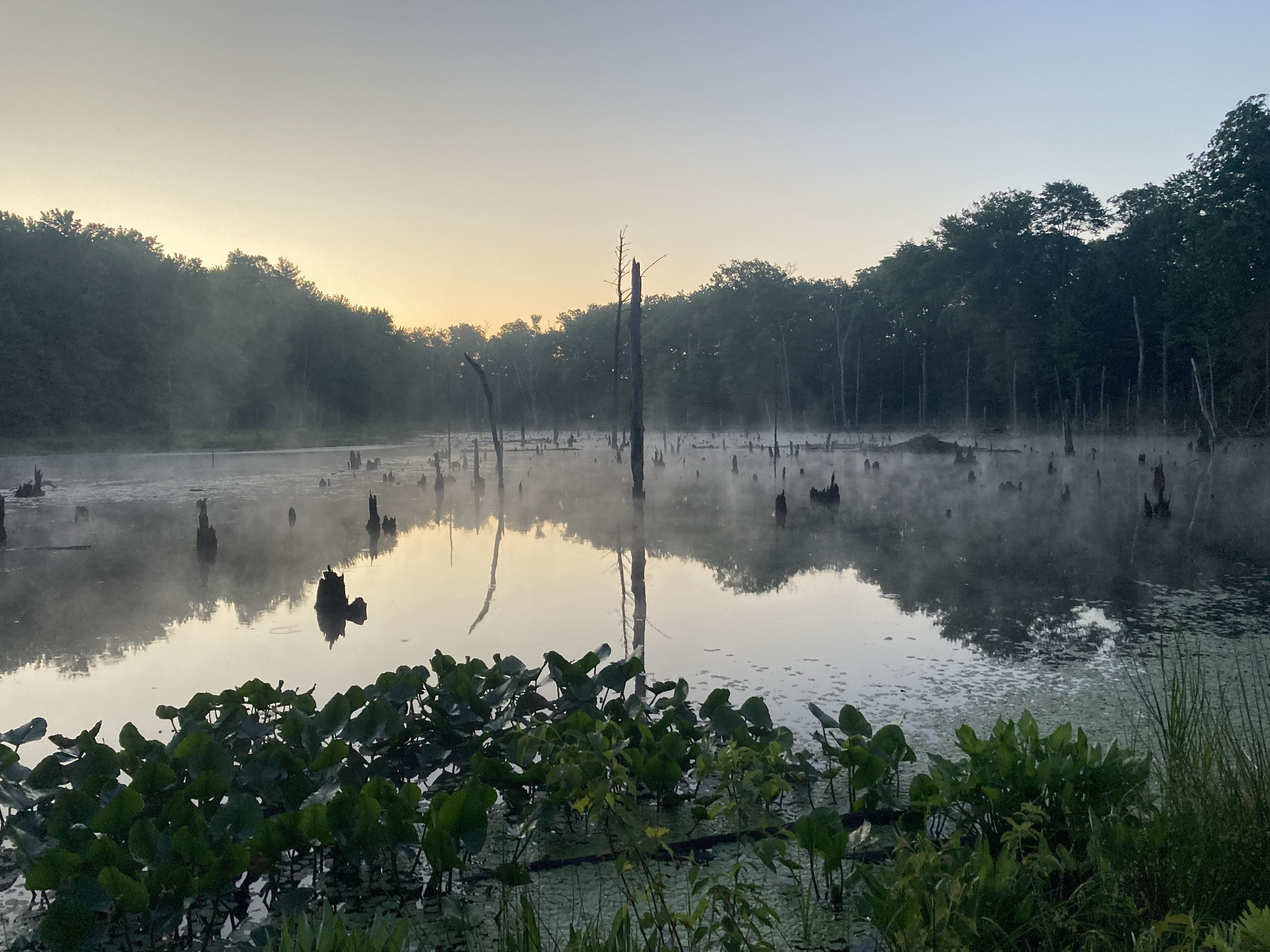
Doug Horner set up a lunch meeting at the Hickory Lake Tavern for him, Fritz, and me. After this, Fritz toured me around his game farm. He told me about all of the wetlands he had created and how he went about building them. I found him to be engaging, with an innovative approach to wetland construction. He emulated beavers. While unorthodox, his approach was brilliant. He disturbed a minimal amount of soil, and this resulted in very few non-native species.
I was at Geauga Park District for 18 months and 14 months into my tenure I found myself in an interesting position. Lake metroparks had hired a very dynamic director, Leon Younger. Leon had a national reputation as a creative and innovative leader. However, he knew absolutely nothing about natural resource management and did not understand the preservation ethic that existed for park districts in Ohio. He and I drove to a conference in Cincinnati and before we got to Columbus, he offered me a job.
I told him I did not want to leave my position, but as we spoke, his offer kept climbing until we were discussing the opportunity for a salary increase of 30 percent. With three young children, I had to take this seriously.
A few weeks later, I talked to Bob McCullough, and he said was “We knew we couldn’t keep you long”.
In the short time I was there, I felt that I had a significant impact on the Geauga Park District and in this time, I learned a great deal, including things that helped me through the rest of my career.
I met some wonderful people and made some great professional connections. Dan Best, Les Ober, Fritz and Tony Paskevich became lifelong friends. I was delighted to introduce Tony to the Park system as he designed several other GPD projects after I left. Tony and I also worked together on a several Lake Metroparks projects.
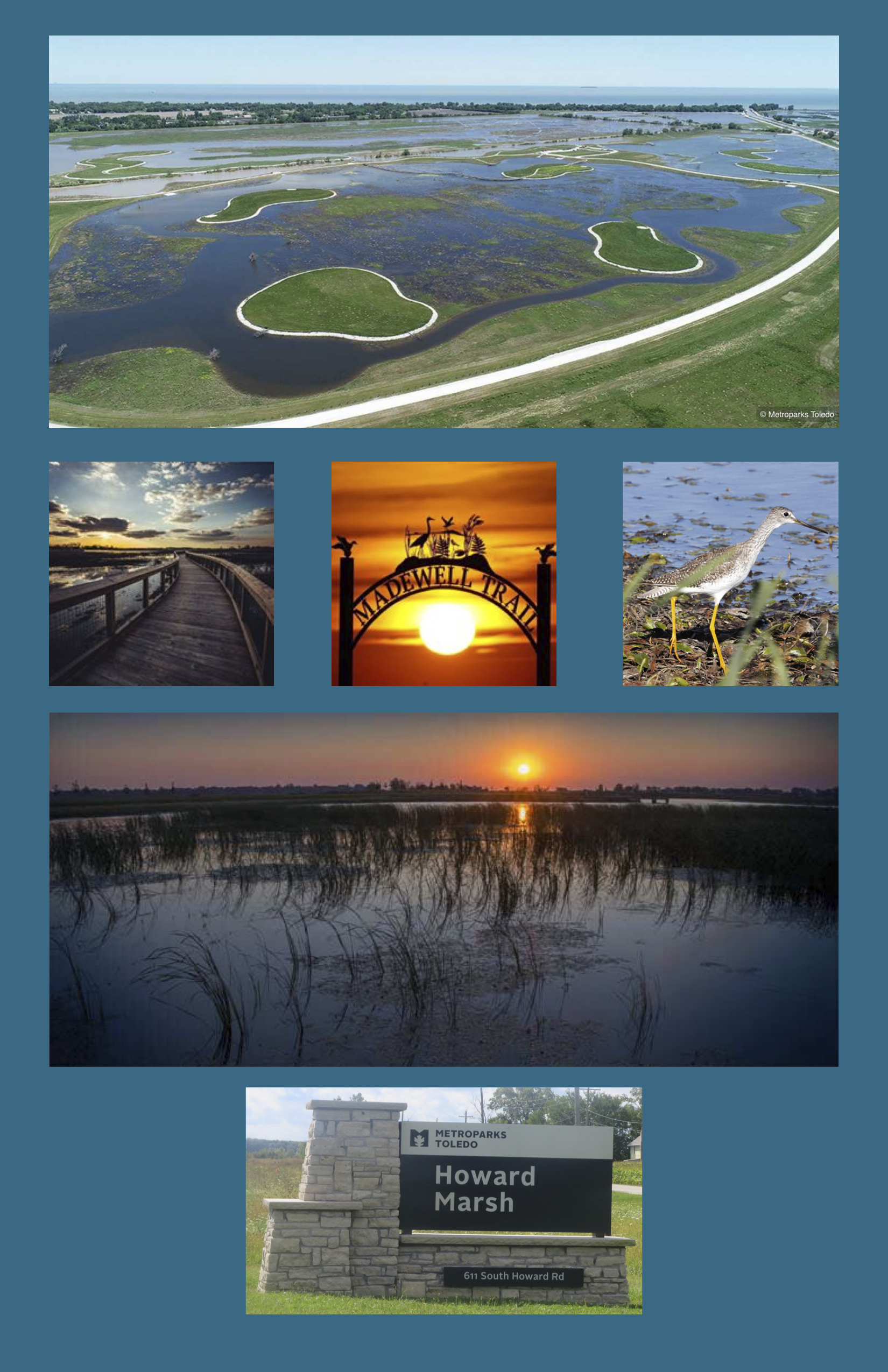
The insights I gained from Fritz’ paid huge dividends for wetland mitigation projects at Lake Metroparks, and on several private projects. Certainly this experience influenced my contribution to the biggest wetland project I was involved with, Howard Marsh. This was while I was working for Toledo Metroparks. At the time it was constructed, Howard Marsh was the largest wetland restoration project in the Great Lakes basin. It has received numerous awards merging wetland restoration, and nature study with passive recreation.
I have continued to enjoy the Geauga Park District since working there and have had the pleasure of being peripherally involved with a number of the parks’ projects.
Years ago I was so intrigued about this Park District located Ohio’s snowbelt. I consider it a true privilege to have worked for the agency and I am both proud and humbled with this recognition.
Good luck to you and continue to do great things.